

Poker Position Terms: Under the Gun (UTG), Hijack, Button and Blinds
A poker table position is the seat a player occupies relative to the dealer button, and it determines the order of action for every betting round. Understanding poker terms under the gun, hijack, lojack, cutoff, button, and the blinds gives a player the vocabulary needed to follow any hand discussion or strategy chart.
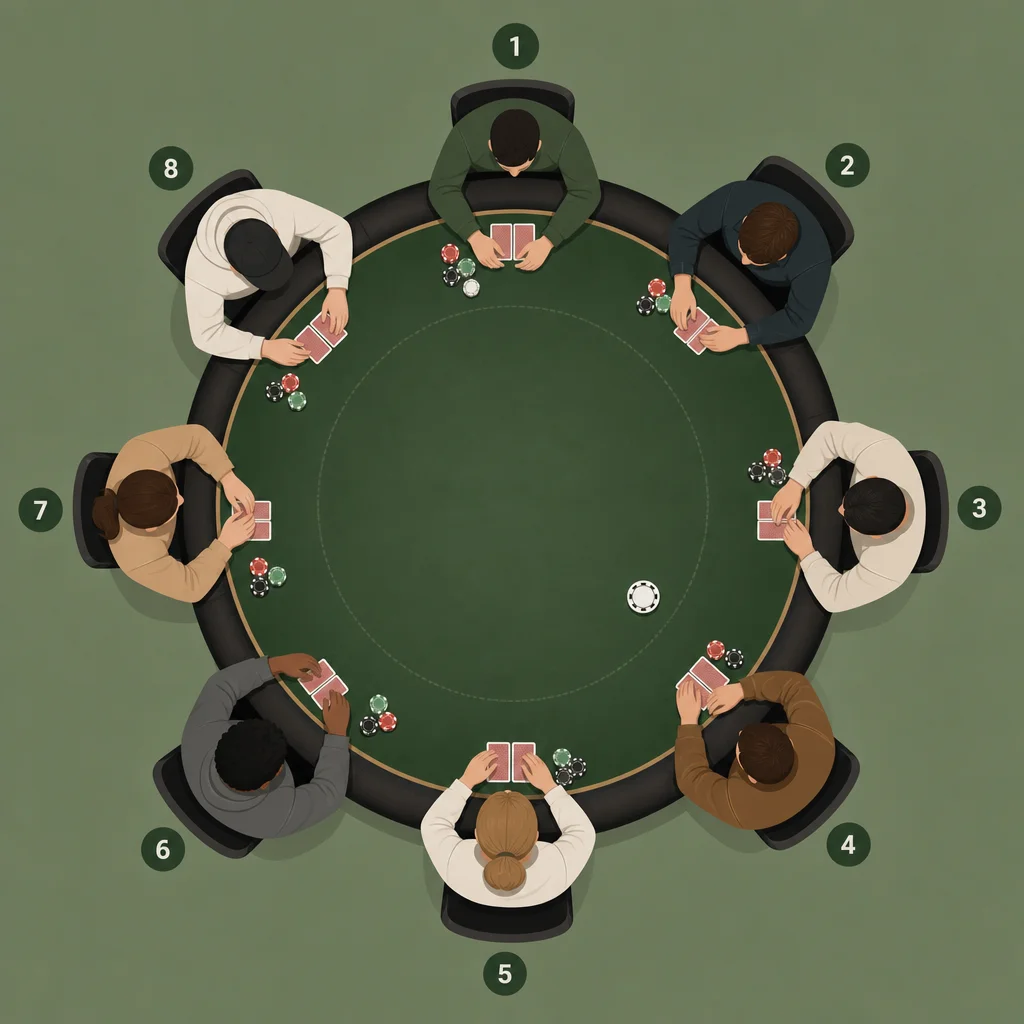
Poker terms under the gun refer to the seat immediately left of the big blind, the first player to act before the flop. Because this seat acts first, it carries the least information of any position at the table. The label shifts one seat left after every hand, since the dealer button moves clockwise around the table.
What Does Under the Gun Mean in Poker
Under the gun (often shortened to UTG) is the seat directly left of the big blind in a full-ring game. This player must act first in the preflop betting round, before seeing how anyone else responds. In a nine or ten-handed game, the table may also reference UTG+1 and UTG+2 for the two seats that follow.
The term carries weight in hand history discussions because it flags a decision made with zero positional information. A chart that reads "UTG raises to 3 big blinds" tells a reader the raiser had no read on the rest of the table before acting.
Seat Count Changes the Label
Poker Terms Hijack and Lojack Explained
The seats between the early positions and the cutoff have their own shorthand. The hijack sits two seats to the right of the button, while the lojack (sometimes written lo-jack) sits one seat further back, directly before the hijack.
- Lojack: third seat from the button, acts after the middle positions
- Hijack: second seat from the button, acts after lojack
- Cutoff: seat directly to the right of the button, last to act before the dealer
These labels became common as nine and ten-handed tables grew popular, since players needed names for seats that previously went unlabeled. A hand history that says "hijack opens, cutoff calls" communicates the exact order of action without listing every seat number.
Poker Term on the Button and Why It Matters
Poker term on the button describes the dealer position itself, marked by a small disc that rotates clockwise after each hand. The button acts last in every postflop betting round, which means this seat sees every other active player's action before deciding.
This entry focuses on what the label means rather than how to exploit it — for the strategic reasoning behind late-position advantage, see the position and betting guide.
The Blinds: Small Blind and Big Blind
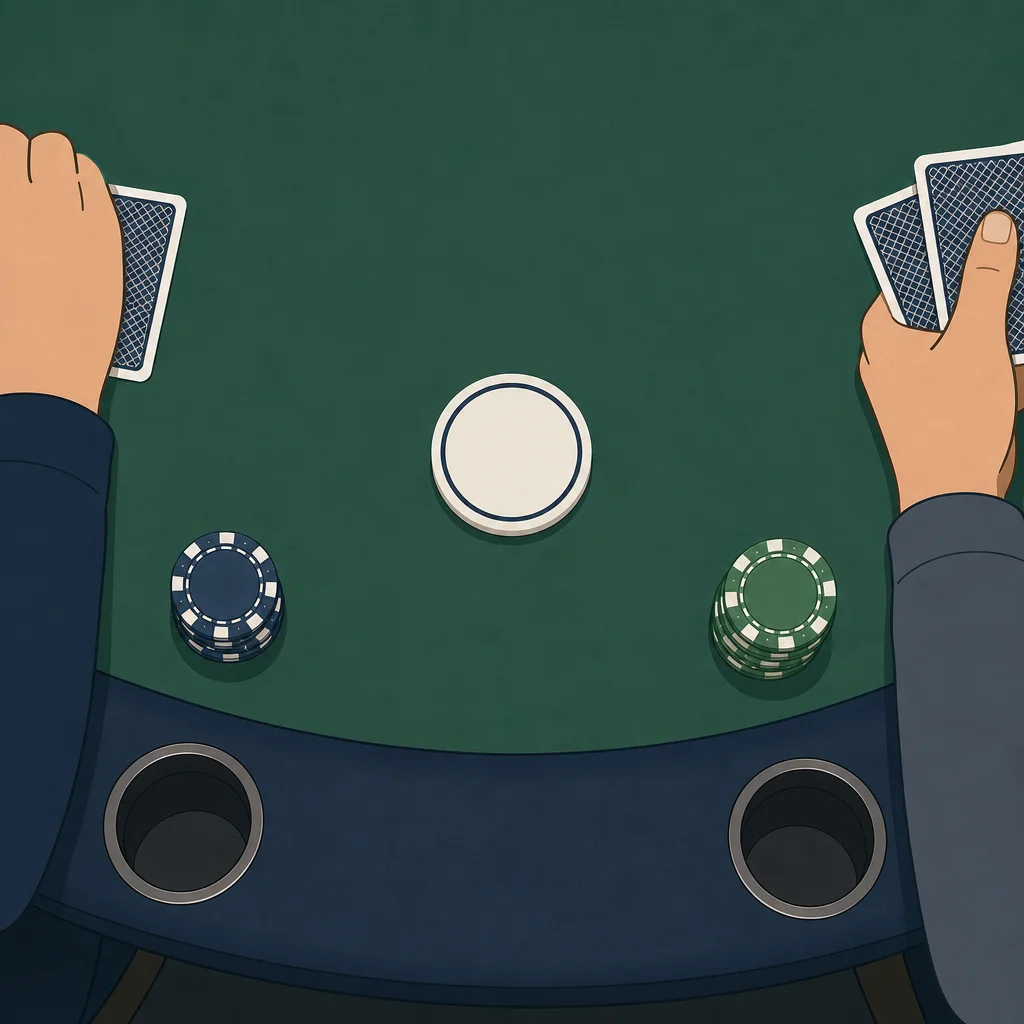
The two seats left of the button post forced bets called the small blind and big blind before any cards are dealt. The small blind sits directly left of the button, and the big blind sits left of the small blind. These forced bets seed the pot.
Postflop, the blinds act first in each betting round rather than last, reversing their preflop advantage. A player who calls from the big blind, for instance, closes preflop action but opens every round afterward.
Poker Terms Straddle: An Optional Extra Blind
A straddle is a voluntary extra blind bet, usually double the big blind, posted by the player under the gun before cards are dealt. It raises the cost of entering the pot and shifts first action to the next player. Some live tables allow a straddle every hand, while others restrict a mississippi straddle to other seats.
Heads Up: When Only Two Players Remain
Poker terms heads up describe any hand or match played between exactly two players, whether that's the final two competitors in a tournament or a dedicated two-player cash game. Position rules change completely here: the button also posts the small blind and acts first before the flop, then acts last on every remaining street.
This shift confuses players moving from full-ring tables for the first time, since the button suddenly carries different preflop and postflop responsibilities. Heads-up terminology sits closest to full-ring blind structure, compressed into two seats instead of nine or ten.
How Position Labels Shift Each Hand
Every position label describes a relationship to the button, not a fixed seat number. The player who was under the gun one hand becomes UTG+1 or later the next, as the button rotates clockwise. Table size also changes which labels apply: a six-max game skips lojack and may only reference UTG, hijack, cutoff, button, and the two blinds.
For related wagering vocabulary such as bet-sizing and pot terms, see the betting terms glossary. The same ground is covered in reference form by Wikipedia's glossary of poker terms.
| Seat Label | Distance From Button | Preflop Action Order |
|---|---|---|
| Under the gun (UTG) | 6 seats before button | 1st to act |
| UTG+1 | 5 seats before button | 2nd to act |
| Lojack | 3 seats before button | 4th to act |
| Hijack | 2 seats before button | 5th to act |
| Cutoff | 1 seat before button | 6th to act |
| Button | 0 (the button itself) | Last to act |