

How to Play Poker With Friends: Small-Table Setups
Learning how to play poker with friends at a small table is mostly a matter of adjusting the format, not the rules. A private game rarely fills a full nine-seat table, so the deal, the betting order, and even the equipment need small tweaks when only two, three, or four players show up. This guide covers those short-handed adjustments, along with practical substitutes when nobody has a chip set on hand.

For the house rules that govern stakes, buy-ins, and who hosts, see the home game rules guide. If the group ends up playing on a website or app instead of around a table, the format changes again — that comparison lives in the playing poker online guide.
How to Play Poker for 2 Players (Heads-Up)
A two-player game is called heads-up, and it flips the usual betting order. The dealer posts the small blind and acts first before the flop, then acts last on every remaining street. Hand values shift too: with only two hands out, high card and one pair win far more often than in a full ring game, so opening ranges widen naturally.
Heads-up sessions move quickly because there's no waiting on multiple opponents to act. For friends short on time, playing several short heads-up matches — best of three, then swap the winner in against a third friend — keeps a two-person night structured without dragging on.
Can You Play Poker With 3 Players?
Three-handed poker works with the standard rules and no special dealing changes. The small blind and big blind rotate as normal, and the dealer button moves clockwise after every hand exactly as it would at a bigger table. Games like Texas Hold'em and Omaha both scale down to three players without issue.
The main difference is pace and variance. With only three hands in play, pots resolve faster and bluffs succeed more often since there are fewer opponents left to call. Tournament-style structures with rising blinds work well here — a short stack pressures the other two players and shortens the session to a predictable length.
How to Play Poker With 4 Players
Four players sits comfortably between heads-up and a full table, and it's a common size for a casual weeknight game. Standard positions apply: dealer, small blind, big blind, and one player acting from early position before the flop. Because only four hands compete for each pot, consider tightening starting-hand requirements slightly compared with what a nine-handed table would call reasonable.
- Rotate the dealer button clockwise after every hand, same as a full table
- Use a visible marker (a coin or card) for the button so nobody loses track
- Agree on blind levels before starting, especially if the group plans to increase them
- Set a fixed end time or a target number of hands so the night has a clear finish
What to Play Poker With Without Chips
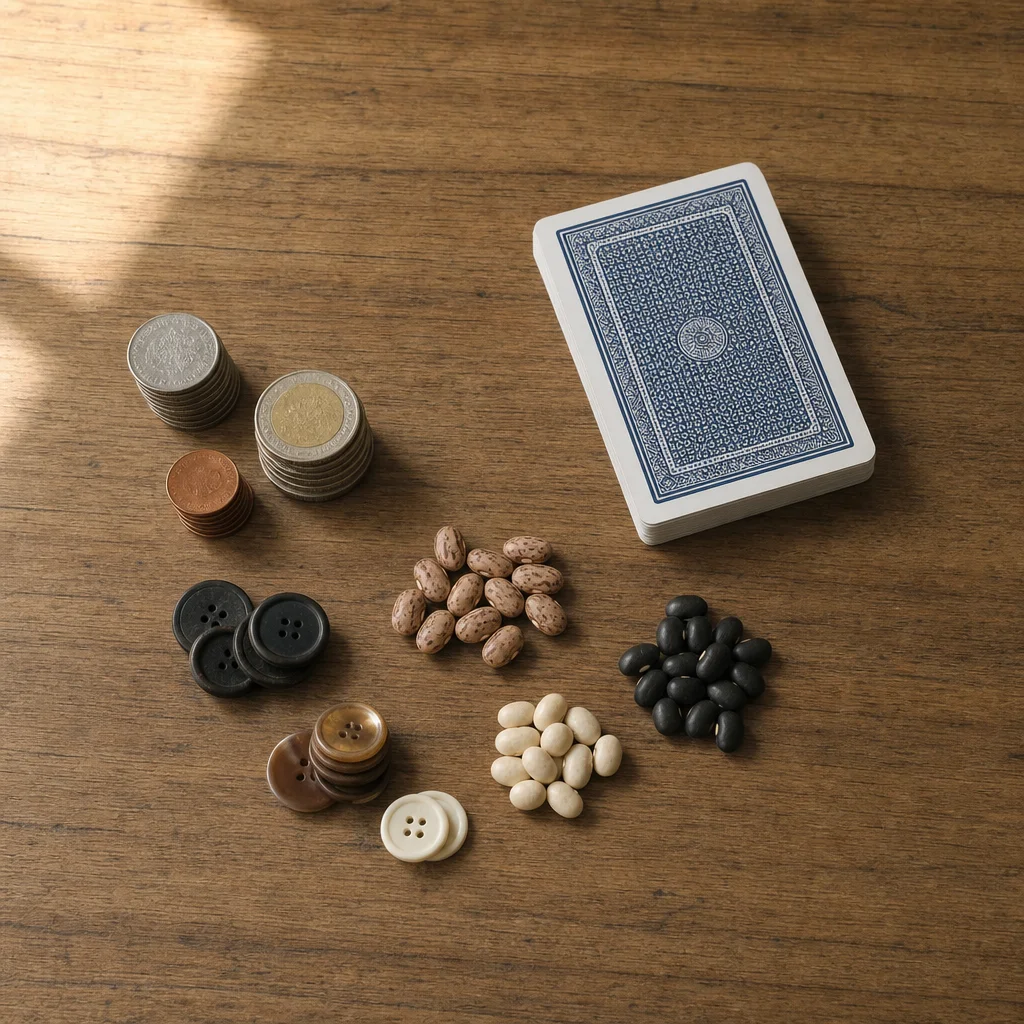
Not having a chip set doesn't have to cancel game night. Households commonly substitute loose change, dried beans, buttons, or even small pieces of candy to represent different bet sizes. The only requirement is that everyone at the table agrees on what each item is worth before the first hand is dealt.
| Substitute | Suggested Value | Notes |
|---|---|---|
| Coins (pennies/dimes/quarters) | Match coin denomination | Easiest to count quickly |
| Dried beans or pasta | Assign by color or type | Cheap, easy to buy in bulk |
| Buttons | Assign by size or color | Good for a themed or vintage game night |
| Paper slips with numbers | Write the value directly on each slip | Works when nothing else is on hand |
Keep a Simple Ledger
Teaching New Players at a Small Table
A small table is actually the easiest place to teach someone how to play poker with friends for the first time. Fewer players means fewer competing bets to track, so a newcomer can focus on hand rankings and betting order without feeling rushed. Play the first few hands face-up, or pause before each round to explain why a fold, call, or raise makes sense.
Short-handed games also punish mistakes less severely early on, since the blinds usually stay small and pots build slowly. Encourage new players to ask about position and blind structure before jumping into bigger bets. Once the basics click, a two-player or three-player table becomes fast practice for reading opponents without the noise of a full room. A standard external reference on the subject is Wikipedia's poker article.
- Short-handed tables move faster, so more hands fit into a limited evening
- New players get individual attention and can ask questions between hands
- Household items make chip substitutes cheap and easy to source
- Fewer opponents means simpler decisions while learning position and betting order
- Wider playable hand ranges can feel confusing without a clear house standard
- Improvised chip values sometimes cause disagreements without a written ledger
- Heads-up and three-handed variance runs higher than in a full ring game