

Texas Hold'em Poker Rules: Structure, Streets and Showdown
Texas hold em is a community-card poker variant where each player gets two private hole cards and combines them with five shared board cards to build the best hand. This entry covers poker rules texas holdem players need from deal to showdown, focused on structure specific to Hold'em rather than general betting mechanics.
A standard Hold'em table seats two to ten players around a dealer button that rotates clockwise after every hand. The button marks the dealer position and sets the order of action, making its movement one of the more essential rules of poker texas hold em to know before sitting down.
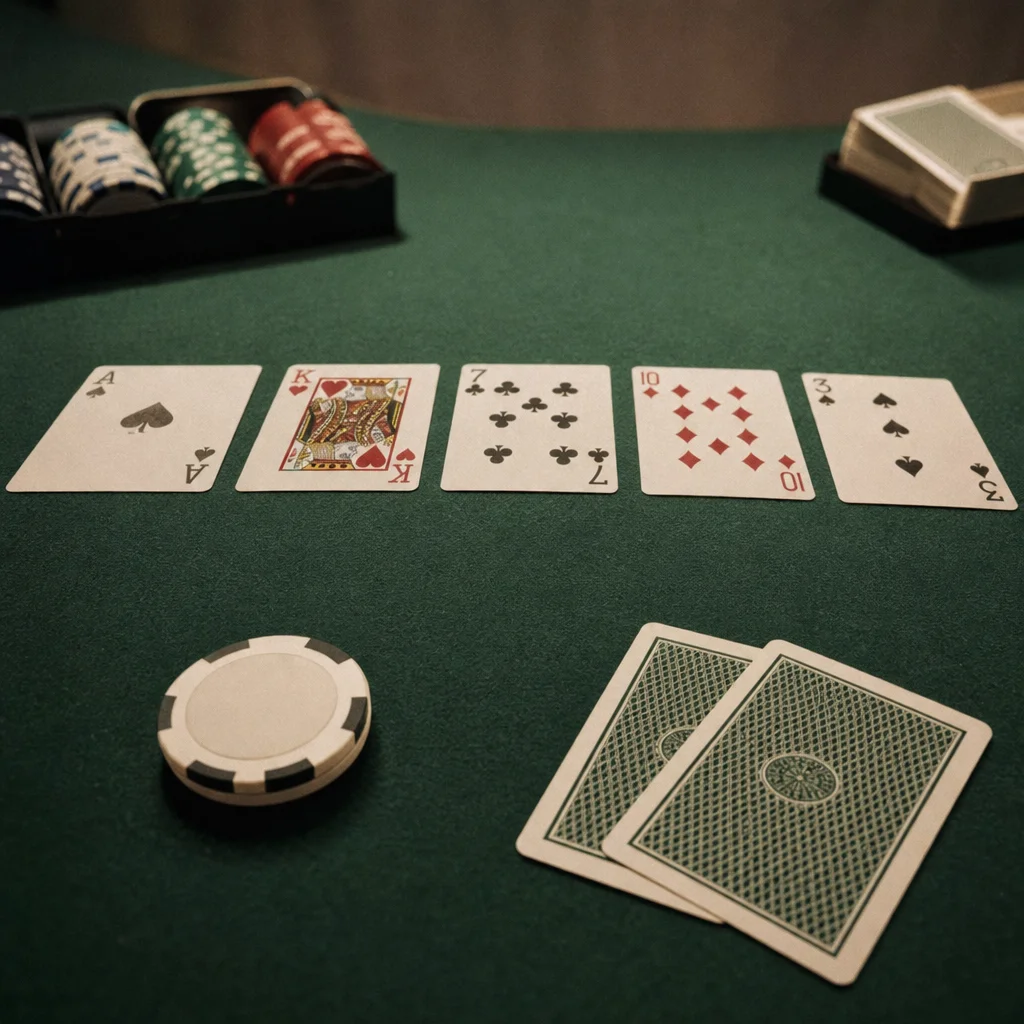
Two seats left of the button post forced bets called blinds: the small blind directly left of the button, the big blind one seat further. These wagers seed the pot before cards are dealt. Straddles and minimum-raise sizing appear on the site's betting rules entry, since they apply across poker variants generally.
Once blinds are posted, the dealer deals two hole cards face down to each player, starting left of the button. These cards belong only to that player and stay hidden until showdown, unless the player folds or reveals them voluntarily.
Preflop Betting Round
The first betting round, called preflop, begins right after hole cards are dealt. Action starts with the player left of the big blind, who can fold, call, or raise. Each remaining player then acts in turn, moving clockwise.
Texas holdem poker rules explained at this stage hinge on one idea: every player must match the highest current bet to stay in the hand, or fold and forfeit the pot. The round ends once all active players have matched the largest bet or folded.
The Flop
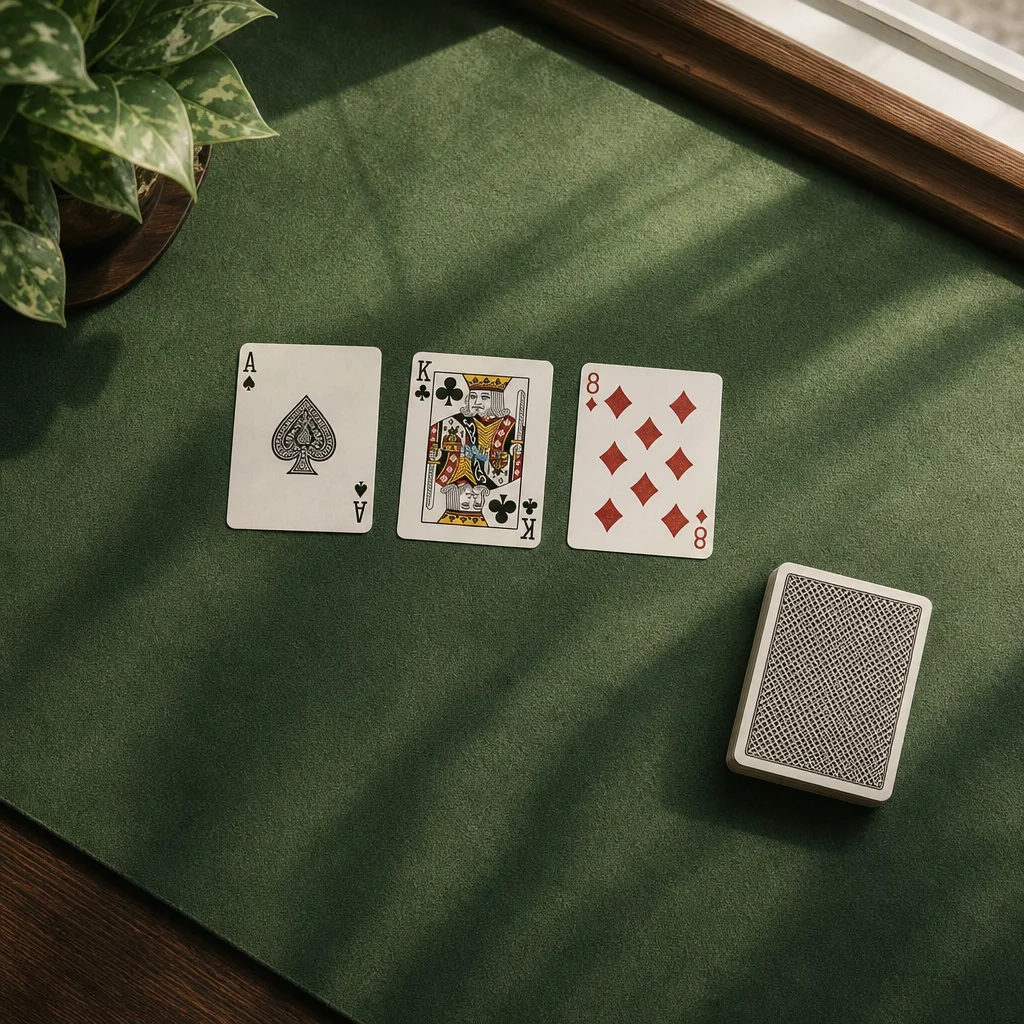
After preflop betting closes, the dealer burns one card face down and deals three community cards face up. This is the flop, and it's the first point where players see shared cards everyone at the table can use.
A new betting round follows the flop, starting with the first active player left of the button. Since no forced bets are live, that player may check, passing the action without wagering. A player may check only when no bet has yet been made; once a bet lands, later players must call, raise, or fold.
The Turn
A single additional community card, dealt after another burn card, forms the turn, giving players four of the five total board cards. Betting follows the same structure as the flop — the first active player left of the button acts first, and checking stays available whenever no bet is on the table.
Stakes typically rise here in fixed-limit and pot-limit games, since the turn narrows the range of hands worth continuing with. Players tracking poker rules no limit hold em specifically will notice bet sizing opens up considerably, since no-limit format lets any player wager their entire remaining stack on any street.
The River and Final Betting
The fifth and final community card, the river, arrives after one more burn card. No further cards get dealt after this point, so every player still in the hand has complete information from the seven cards — two hole cards plus five community cards.
The final round works like the flop and turn: the first active player left of the button acts first, checking is legal until a bet occurs, and each later player must call, raise, or fold. Once action closes with two or more players remaining, the hand moves to showdown.
Showdown Order and Determining the Winner
At showdown, players reveal their hole cards to determine the winner using standard hand rankings. The reveal order follows a set sequence: the last player to bet or raise on the river shows first; if no bets occurred, the player left of the button shows first, followed clockwise.
The dealer compares each revealed hand and awards the pot to whoever holds the best five-card combination from hole cards and community cards. A hand made entirely from the board ties any other player able to make that same board-only hand, splitting the pot.
| Street | Cards Dealt | Total Cards Visible |
|---|---|---|
| Preflop | 2 hole cards per player | 2 |
| Flop | 3 community cards | 5 |
| Turn | 1 community card | 6 |
| River | 1 community card | 7 |
This four-street structure — preflop, flop, turn, river — separates Hold'em from other community-card variants. Four-hole-card play, as in Omaha, follows a different hand-construction rule and is covered on the site's Omaha rules entry rather than here. The same ground is covered in reference form by Wikipedia's Texas hold 'em article.