

How to Play Poker Online: Formats, Speed and Legality
Playing poker online means using a computer or mobile client to sit at a virtual table instead of a physical one, with software handling the deal, the betting, and the pot. The rules of the game itself do not change: a flush still beats a straight, and position still matters. What changes is the environment — how many hands arrive per hour, how many tables a player can run at once, and which jurisdictions permit real-money play at all.
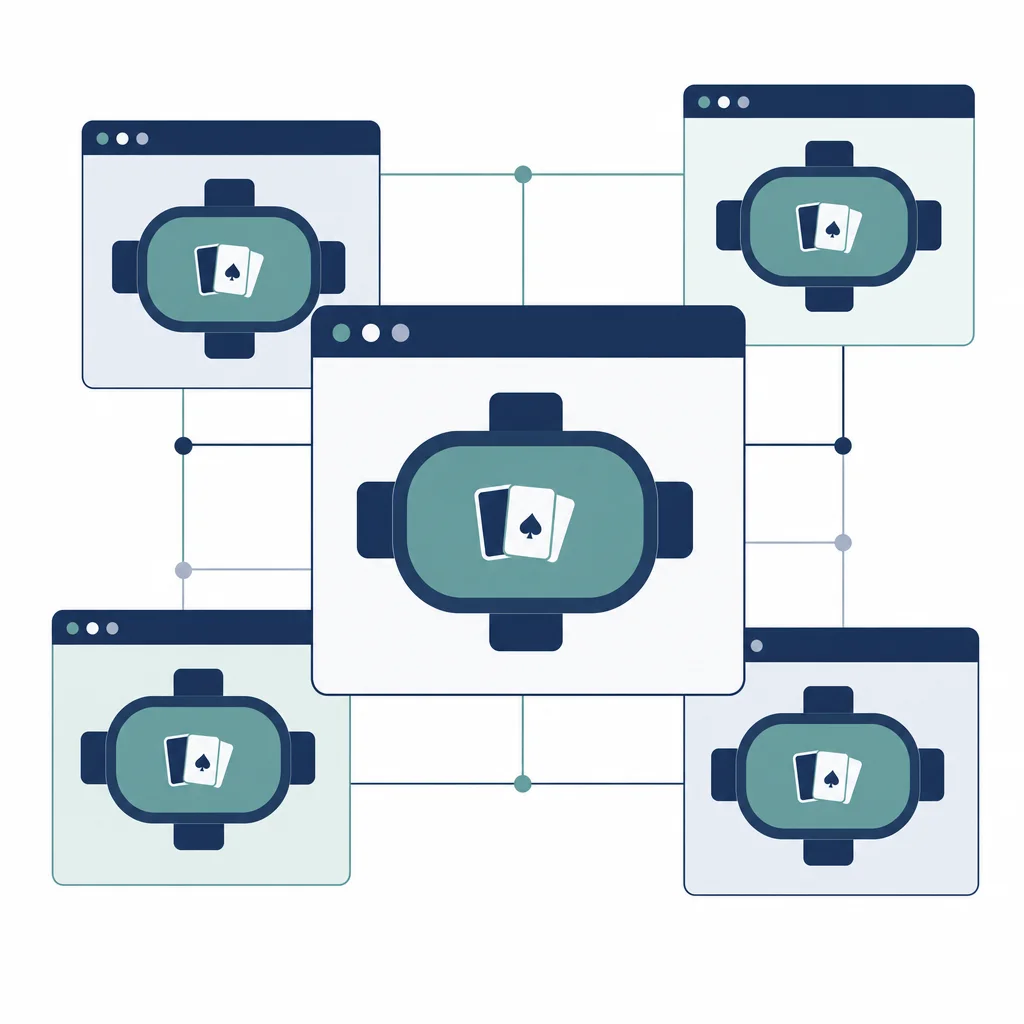
For a player who already knows the hand rankings and betting structures, the online medium introduces a different rhythm. Software deals continuously, seating is instant, and stakes range from free-play chips to high-stakes cash games. This entry covers that environment: table formats, dealing speed, multi-tabling, and the legal patchwork that determines where real-money play is possible.
Table Formats Available Online
Online rooms typically offer three core formats: standard ring games, multi-table tournaments, and fast-fold pools. A ring game seats up to nine players at one fixed table until they leave. A multi-table tournament groups hundreds or thousands of entrants across many tables, redistributing players as tables break, until one winner holds every chip in play.
Fast-fold formats, marketed under names like Zoom Poker or Rush Poker, remove the wait entirely. The moment a player folds, the software moves them to a brand-new hand at a different table with different opponents. There is no showdown to watch and no need to wait for the next deal — the client simply reseats the player instantly.
Hands Per Hour: Online Versus Live
Dealing speed is the clearest structural difference between online and live poker. A live dealer, shuffling and pushing pots by hand, produces roughly 25 to 35 hands per hour at a full table. Online software removes the physical shuffle and the manual pot push, so a single standard online table runs 60 to 80 hands per hour — often double the live rate.

| Format | Hands Per Hour | Tables at Once |
|---|---|---|
| Live cash game | 25-35 | 1 |
| Standard online table | 60-80 | 1 |
| Online, 4-tabling | 240-320 | 4 |
| Zoom / fast-fold poker | 80-100 per table | 1 (no wait between hands) |
Zoom-style poker pushes the per-table rate even higher because the software eliminates dead time between hands entirely. A player who asks how many poker hands per hour online is realistic should treat 60-80 as the baseline for a single standard table, with fast-fold formats and multi-tabling multiplying that figure well beyond what any live table can produce.
Multi-Tabling and Playing Zoom Poker
Because online tables run on software rather than a shared physical deck, a single player can open several tables in separate windows and act on each as decisions come up. This practice, called multi-tabling, is unique to the online medium — a live player can only ever sit at one table at a time.
Learning how to play Zoom poker follows the same rules as any cash game — the difference is entirely procedural. After folding or finishing a hand, the client automatically seats the player at a new table, so there's no dedicated seat to return to. This format rewards players who can make fast, simple decisions, since dwelling too long on marginal spots slows down every player sharing that fast-fold pool.
Related Topics
Where Online Poker Is Legal
Legal status for real-money online poker varies by jurisdiction and is not uniform even within a single country. Some nations license and regulate online poker rooms directly, some permit play on offshore sites without local licensing, and others prohibit real-money online play outright while allowing free-play or social formats.
In the United States, legality is set at the state level rather than federally, so a regulated real-money site licensed in one state may be unavailable in a neighboring one. Players outside a regulated market can typically still access free-play tables, since these do not involve real-money wagering and fall outside most gambling statutes. Checking the specific rules of a home jurisdiction before depositing real money remains the only reliable approach, since enforcement and licensing frameworks change over time.