

Learn Poker: Reference Path for New Players
To learn poker is to work through a fixed sequence of knowledge: rules, hand rankings, table mechanics, guided practice, and then strategy. Most new players try to learn poker basics all at once, which is why the game feels harder than it needs to be. This portal breaks the process of learning poker into stages and points to the entry that covers each one in depth.
Why a Learning Path Matters for Poker Learning
Poker combines fixed rules with variable, opponent-dependent decisions, so a poker learning guide has to separate what is memorized from what is practiced. The rules and hand rankings are static facts, unchanged from table to table. Reading opponents, sizing bets, and managing a bankroll are skills built through repetition rather than memorization. Sequencing the two prevents the common mistake of studying advanced strategy before the basic mechanics are automatic, which tends to overwhelm a new player with decisions they aren't yet equipped to make quickly.
A structured sequence also matches how poker learning resources are usually organized across a reference site: rules first, then hand values, then practical play, then the tactical layer. Each stage below names the type of entry that covers it, without repeating that entry's content here. Following the stages in order, rather than jumping straight to strategy articles, tends to produce steadier progress because each stage assumes the one before it is already solid.
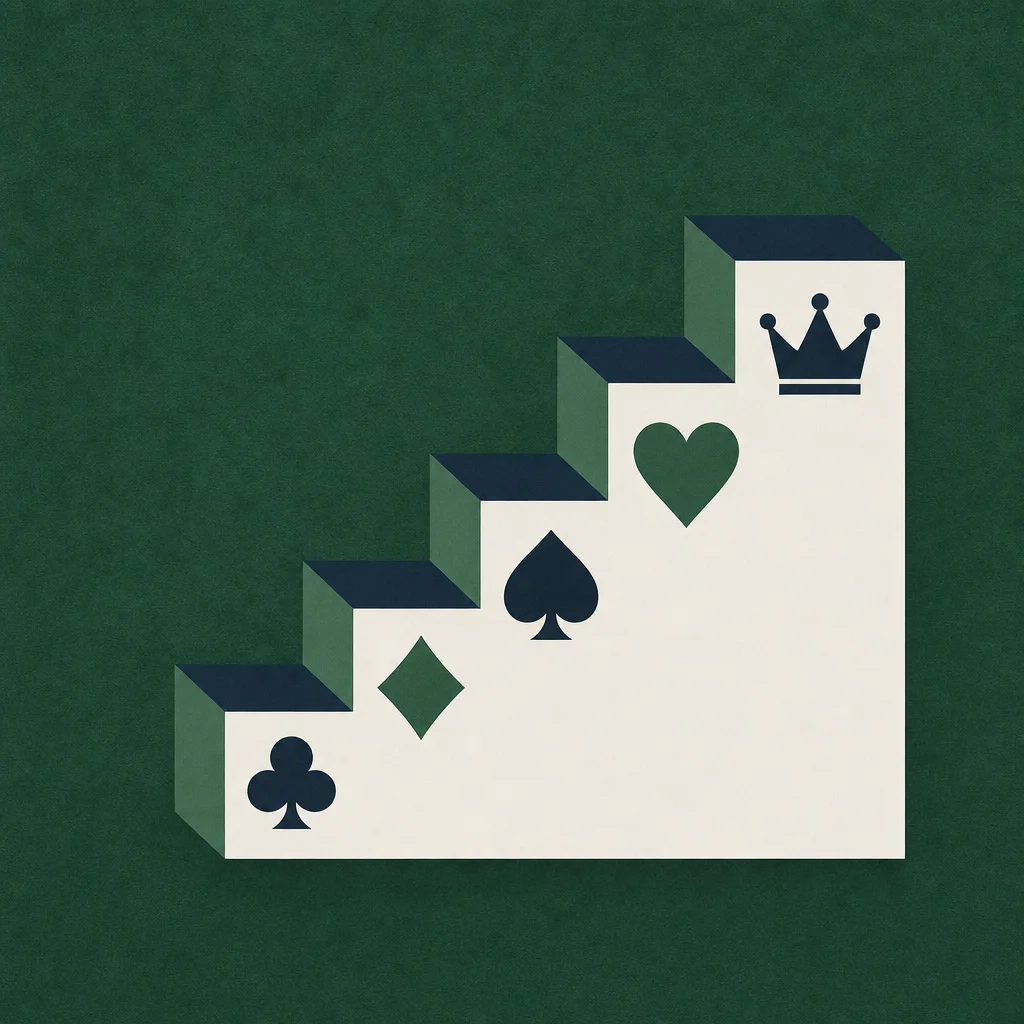
The Five Stages to Learn Poker Basics
- Core rules: betting rounds, positions, blinds, and how a hand ends — the foundation every other stage assumes.
- Hand rankings: the fixed order of hand strength, from high card to royal flush, used to settle every showdown.
- Table mechanics: how chips move, how betting limits work, and how a dealer sequences the action at a live or online table.
- Guided practice: playing low-stakes or free hands to turn memorized rules into fast, automatic decisions.
- Strategy concepts: position, pot odds, and hand-reading — the tactical layer that separates a rules-literate player from a strong one.
The full step-by-step walkthrough for stage one and two lives in the how-to-play entry, linked below. Anyone who wants to learn poker beyond the basics should treat that guide as the next stop after this page. Strategy concepts from stage five have their own dedicated section on this site rather than a summary here.
Where Each Stage Is Covered

| Stage | What It Covers | Typical Time Investment |
|---|---|---|
| Rules and setup | Betting rounds, blinds, positions, and hand order | 30-60 minutes |
| Hand rankings | Memorizing and recognizing the fixed hand-strength order | 15-30 minutes |
| Table mechanics | Chip handling, betting limits, dealer sequencing | 1-2 sessions of play |
| Guided practice | Low-stakes or free hands to build automatic decisions | 10-20 hands minimum |
| Strategy concepts | Position, pot odds, hand-reading, and other tactical tools | Ongoing, ranked by difficulty |
For the full step-by-step walkthrough of rules and setup, see the how-to-play-poker guide. Once the mechanics are automatic, the strategy portal covers position, pot odds, and hand-reading in depth.
A Common Misconception
How Long It Takes to Learn About Poker
The rules and hand rankings alone take most beginners under two hours to absorb. Real competence — reading bet sizes, tracking position, and making sound folds — takes measurably longer. A player who studies rules for one evening and then plays 50-100 low-stakes hands typically reaches comfortable, if unpolished, decision-making within two to four weeks of casual play. Players who practice daily in short sessions often report the rules feeling automatic well before the four-week mark, since frequency matters more than total hours studied.
That timeline varies with how familiar the player already is with card games and probability. Someone with a background in bridge or blackjack usually moves through the rules and hand-ranking stages faster, since the underlying logic of ranked outcomes and probability is not new to them. Players coming from no card-game background at all should expect the hand-rankings stage to take a little longer, simply because the order of hand strength has to be memorized from scratch rather than mapped onto existing knowledge.
Related Articles
Frequently Asked Questions
Can you learn poker?
Is poker hard to learn?
How long does it take to learn poker?
Is poker luck or skill?
Why learn poker?
- How Poker Works: Structure of a Hand and a SessionHow does poker work? See how the pot, betting rounds, rake, and tournament economics fit t…
- How to Memorize Poker Hand RankingsLearn how to remember poker hands with proven mnemonics, grouping logic, and spaced-repeti…
- Playing Poker Online: Formats, Speed and LegalityLearn how to play poker online: table formats, zoom speed, hands per hour, and where it's…
- Playing Poker with Friends: Small-Table SetupsLearn how to play poker with friends at short tables, heads-up, or without chips. Practica…
- Poker for Beginners: The Essential FoundationsPoker for beginners explained: core concepts, betting basics, and common mistakes new play…