

Home Poker Night Rules and House Conventions
Poker night rules are the agreed-upon standards a private game uses to set buy-ins, chip values, and betting structure before the first card hits the felt. Every home table runs on some version of card game house rules, whether the group writes them down or just repeats what worked last time. Once your table already knows how to play a hand, organizing a poker night rules setup shifts to buy-ins, chip denominations, and staying on the right side of local law.
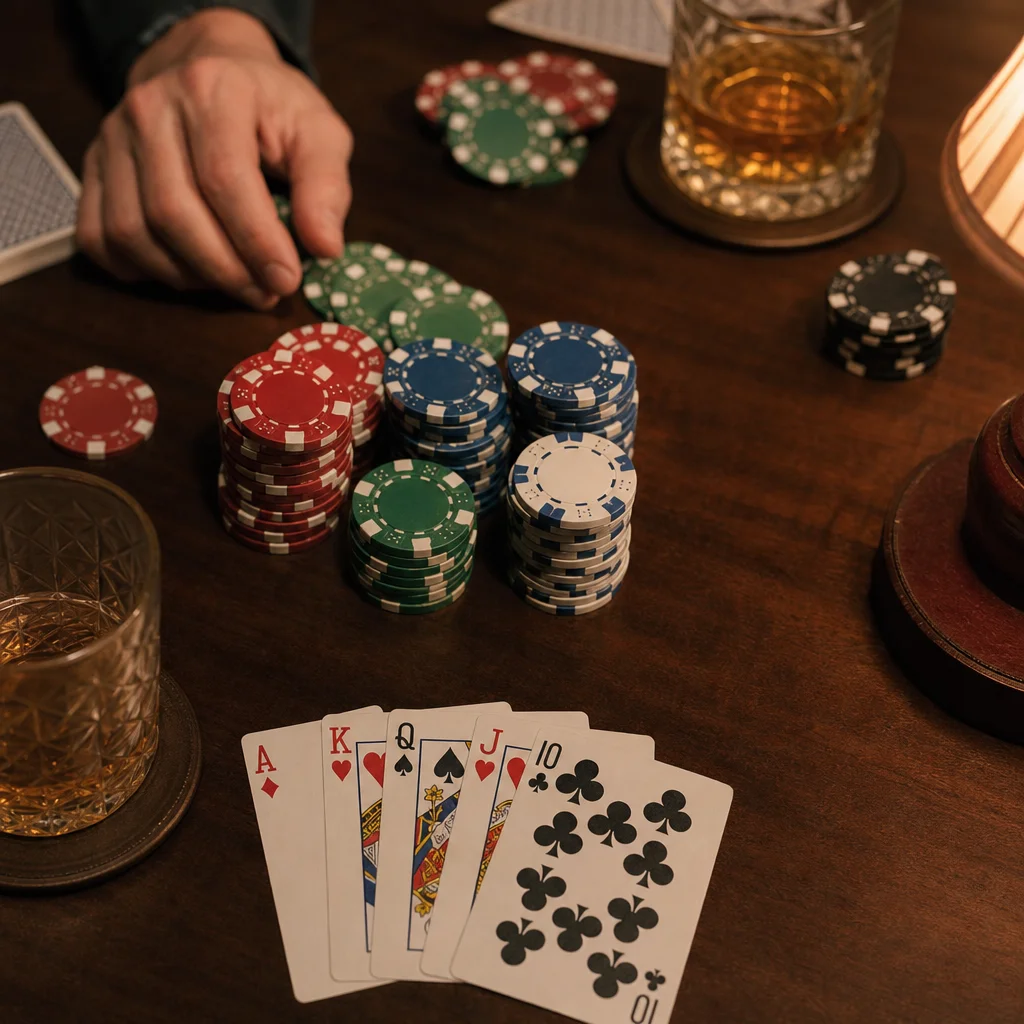
Setting Buy-Ins and Stakes
A buy-in is the amount each player pays to receive their starting chip stack, and it sets the tone for the night. Home games typically use a flat buy-in — for example, $20 or $40 per player — rather than the escalating tournament-style blinds seen in casinos. Many hosts also set a minimum and maximum buy-in, often a 20x-to-100x big blind range, so newer players can sit with a smaller stack while regulars rebuy higher.
Rebuys deserve their own house rule. Some tables allow unlimited rebuys until a cutoff time, such as the end of the first hour, after which the game turns freezeout. Poker league rules for recurring series often standardize this, using the same buy-in and cutoff every week.
Chip Denominations and Values
Working out how many chips to play poker with starts with matching chip colors to dollar values before anyone sits down. A common setup assigns white chips as $1, red as $5, green as $25, and black as $100, though the scale should match your buy-in size. For a $20 buy-in, a simpler split — white at 25 cents, red at $1, blue at $5 — keeps the math easy for players still counting pots by hand.
A workable starting stack runs 100 to 150 total chips per player, split across three or four denominations. Hosts should keep a bank of extra chips off the table for rebuys or a game that runs long. Writing chip values on an index card near the dealer avoids arguments later, once several colors mix into the same pot.
Quick Chip Guide
Legality of Hosting a Home Game
Stakes size matters too. A handful of states cap the legal amount in a social game, so a friendly $20 table looks different under the law than a $500 game. Because rules vary by state, check local statutes before hosting regularly. For a short-handed table or a game without chips, see our guide on home poker with friends.

House Rules for Small and Family Games
Poker rules for 2 players usually drop straight to heads-up structure, where the dealer posts the small blind and the other player posts the big blind, and betting order flips compared to a full table. Heads-up strategy goes deeper than house-rule scope, so a table moving in that direction should reference a dedicated short-handed resource rather than general house conventions.
Poker rules for kids typically strip out real-money betting, replacing it with candy or points to keep the game about mechanics. Simplifying to one betting round per street, or using straightforward five-card draw, helps younger players grasp hand rankings first.
Handling Disputes and Dealing Etiquette
Even a well-planned poker night rules sheet won't cover every situation that comes up mid-hand. A house rule naming one player as the final word on disputed pots — often the most experienced player at the table — keeps disagreements from stalling the game. Misdeals, exposed cards, and muck procedures each carry their own formal conventions; our dealing and etiquette guide covers those in full, so this page focuses on setup decisions made before cards are dealt.
Getting the buy-in, chip values, and legal basics right before the game starts prevents most of the friction that derails home poker night rules later on. A short written house-rules sheet — buy-in amount, chip values, rebuy cutoff, and who settles disputes — takes ten minutes to draft and saves much longer arguments once the cards are in the air. For the formal reference treatment of this material, see the Pagat card-game rules archive.