

One Pair in Poker: Rules, Kickers and Ranking
One pair poker hands contain exactly two cards of the same rank, combined with three unrelated side cards. In the standard hand-ranking chart, one pair sits directly above high card and below two pair, making it the second-weakest category among the ten recognized poker hands. Because a single matching rank is common in a five-card hand, one pair shows up more often at showdown than almost any other hand type.
What Counts as a Pair Poker Hand
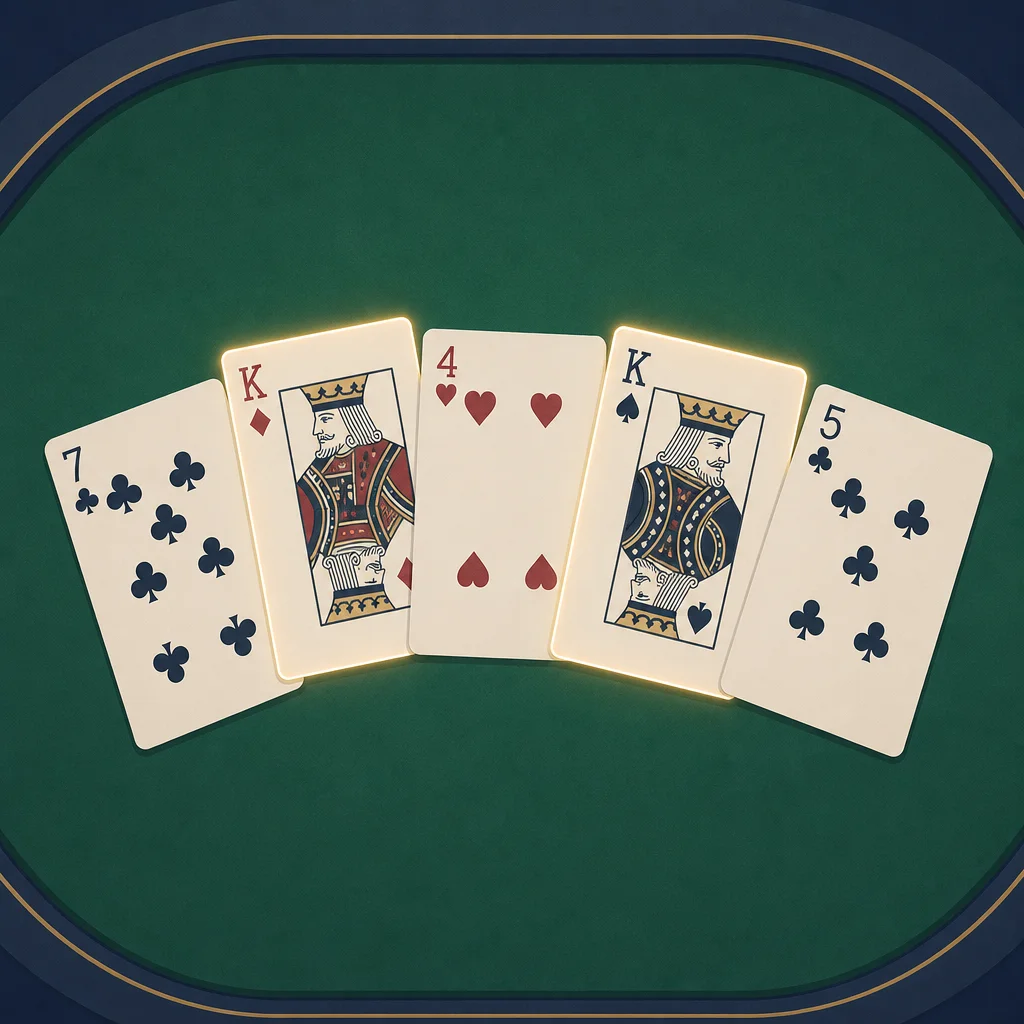
A pair poker hand needs two cards sharing one rank — for example, two nines — plus three additional cards of different, unmatched ranks. Suits play no role in forming or ranking a pair; a nine of spades and a nine of hearts pair up exactly like a nine of clubs and a nine of diamonds. The three remaining cards, called side cards, must all differ from each other and from the pair. If any of them matched, the hand would upgrade to two pair, three of a kind, or better.
In community card games such as Texas Hold'em, a pair can form entirely in a player's hole cards, entirely on the board, or from one hole card matching one board card. However it comes together, the same rule applies: two matching ranks plus three unmatched side cards define one pair rules poker hands consistently across every variant.
How Pair Rank Determines the Winner
When two or more players hold one pair, the first comparison is the rank of the pair itself. A pair of kings beats a pair of jacks regardless of the other three cards in either hand. This is why players often describe a made pair by its rank alone — top pair, middle pair, or bottom pair — language that refers to where the paired rank sits relative to the community cards on the board.
Pair Rank Comes First
Kickers: Breaking Ties Between Equal Pairs
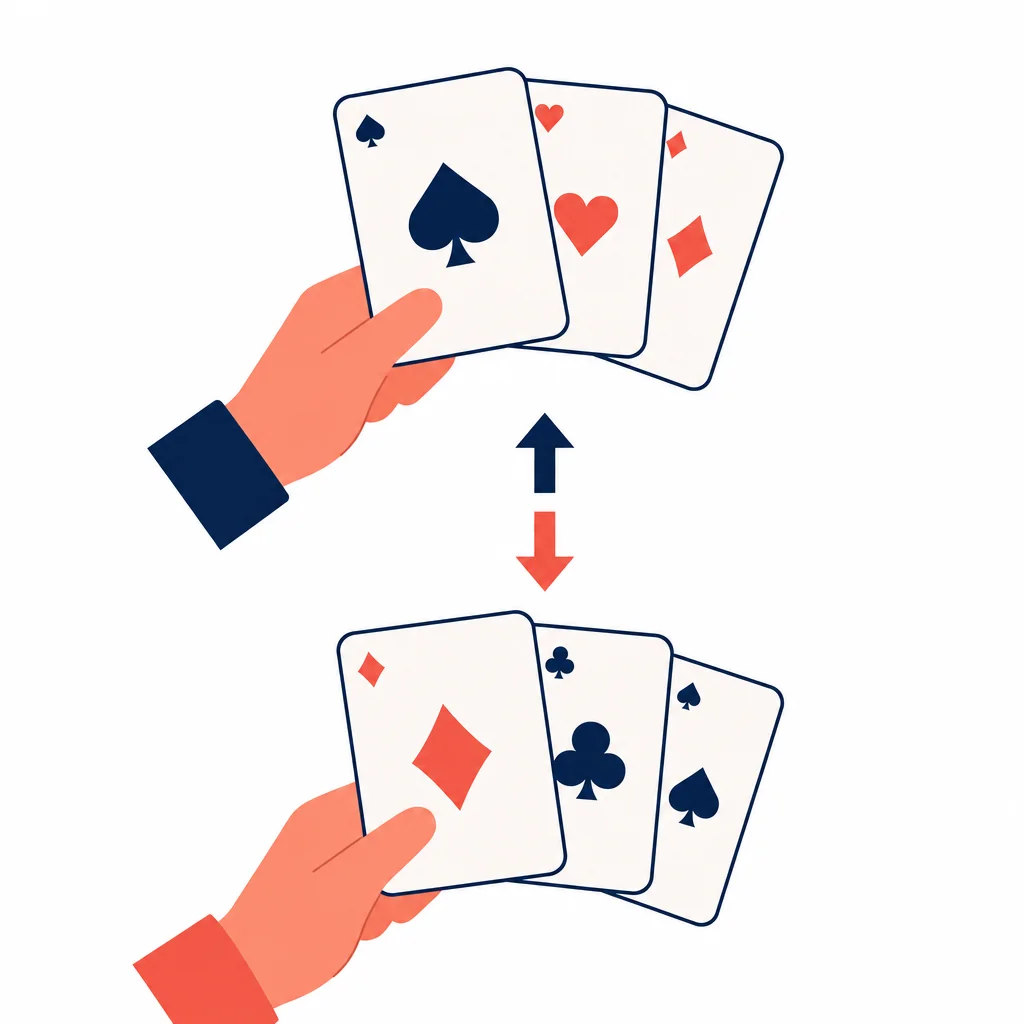
When both players hold a pair of the same rank, the three unmatched side cards — the kickers — settle the tie. Kickers are compared one at a time, starting with the highest card in each hand and working downward. The first kicker that differs between the two hands decides the winner; the remaining kickers are irrelevant once that comparison is made.
| Hand | Pair | Kicker 1 | Kicker 2 | Kicker 3 | Result |
|---|---|---|---|---|---|
| Hand A | 9-9 | A | Q | 6 | Wins on first kicker |
| Hand B | 9-9 | K | J | 8 | Loses despite matching pair |
In the example above, both hands hold a pair of nines, so the pair rank alone cannot separate them. Hand A's ace-high kicker beats Hand B's king-high kicker on the very first comparison, so the second and third kickers never come into play. This kicker-first method applies the same way in Hold'em, Omaha, and stud games whenever the paired rank matches.
One Pair's Place in the Hand Ranking Order
One pair ranks above high card, the lowest hand category, because a single matched rank is a stronger showing than five entirely unconnected cards. It ranks below two pair, three of a kind, and every category above them, since those hands contain more matching structure. For a full breakdown of how one pair compares against every other category and specific tie-break verdicts, see our guide on what beats what in poker hand rankings.
It's worth noting that pair poker hand strength is relative to the game and the board. A pair of aces is the strongest possible one-pair hand in a standard 52-card deck, since no rank sits above ace. A pair of twos is the weakest, though it can still beat a high-card hand or a weaker, lower pair held by an opponent.
Related Hands You May Encounter
Two related situations often cause confusion for newer players. First, when no player makes a pair at all, the showdown is decided purely by kicker comparisons among high-card hands — a separate ranking process covered in our high card hand guide. Second, when a hand contains two separate pairs instead of one, different composition and tie-break rules apply, detailed in our two pair hand guide.
- One pair = two cards of matching rank plus three unmatched side cards
- Pair rank is compared first between competing one-pair hands
- Kickers break ties when both players hold the same pair rank
- Kickers compare highest-to-lowest, one at a time
- One pair ranks above high card and below two pair in the standard hierarchy