

Three of a Kind in Poker: Trips, Sets, Rules and Ranking
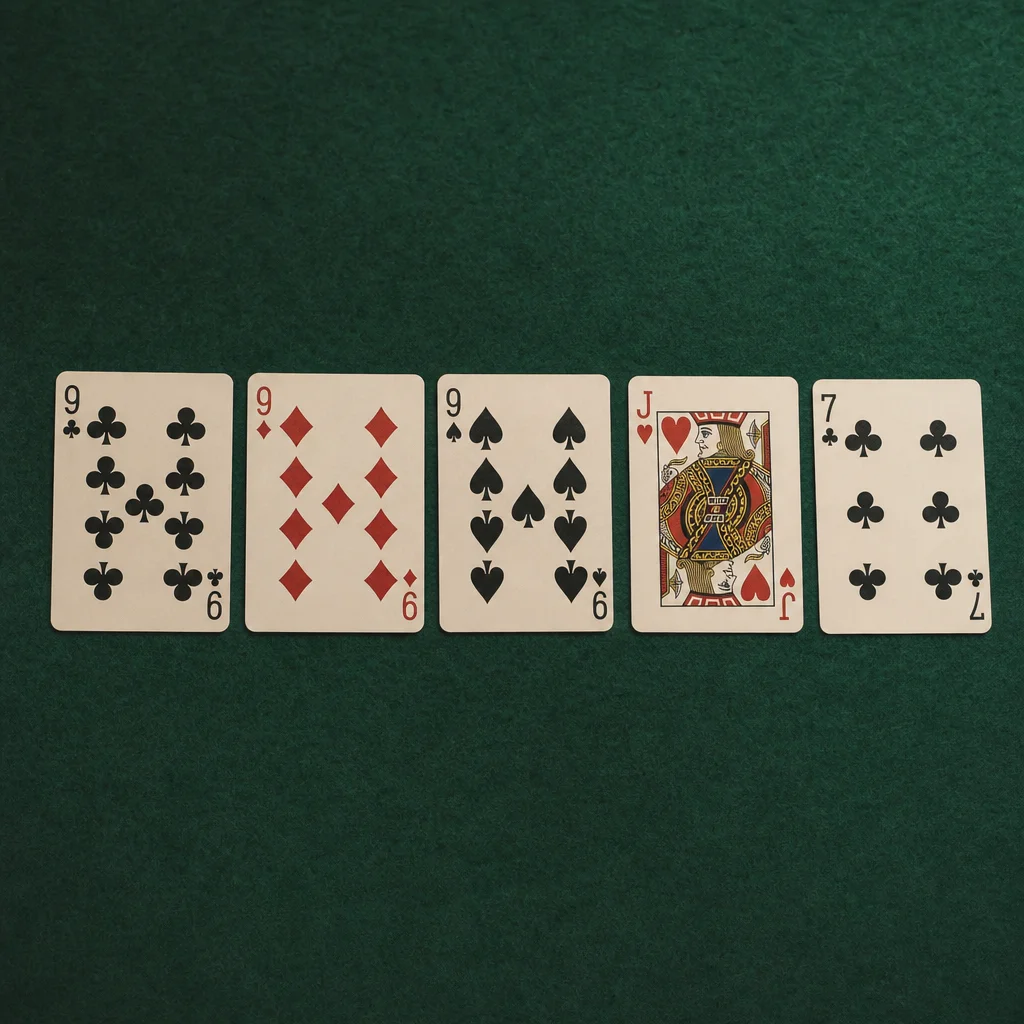
Three of a kind poker is a five-card hand containing three cards of the same rank, plus two unrelated side cards. The rank of the matching cards decides the hand's strength, and the two leftover cards act as kickers only when two players hold the same three of a kind. This hand forms in nearly every variant, from Texas Hold'em to seven-card stud, and it appears often enough that recognizing it quickly is a basic skill for any player.
Poker rules three of a kind place the hand in a fixed spot on the standard ranking chart: above two pair and below a straight. That position holds across nearly all poker variants that use the traditional high-hand ranking system, including Hold'em, Omaha, and stud games. For the complete order of every hand type and how they compare head-to-head, see our hand rankings guide.
How a Three of a Kind Poker Hand Forms
A three of a kind poker hand needs exactly three cards sharing one rank — for example, three nines — combined with two cards of different, unmatched ranks. If a fourth card of the same rank appears, the hand upgrades to four of a kind instead, which ranks far higher. In community-card games like Hold'em, a player can form trips using any combination of hole cards and board cards, as long as the total reaches three matching ranks and the other two cards do not pair up.
The two side cards, often called kickers, rarely matter for the type classification itself, but they decide ties. When two players both hold three of a kind of the same rank — a rare event that mostly happens in stud or Omaha with shared community cards — the higher kicker wins the pot. Suits carry no weight in this comparison; only rank determines the outcome.
Trips vs a Set: What the Terms Describe
Trips and a set both refer to a three of a kind, but players commonly use the two words to describe different card combinations rather than different hand strengths. A set typically describes three of a kind made with a pocket pair in the hole plus one matching card on the board — for instance, holding two eights and catching a third eight on the flop. Trips usually describes three of a kind made when two of the matching cards sit on the board and only one is in the hole.
This distinction matters strategically because a set is far better disguised than trips. Opponents can see two of the three matching cards on the board when a player holds trips, which makes the hand easier to read. A set hides two of the three matching cards in the hole, so opponents have a much harder time putting the player on that exact holding. For the full informal vocabulary poker players use around these hands, see our poker slang glossary.
Where Three of a Kind Sits in the Hand Ranking Hierarchy
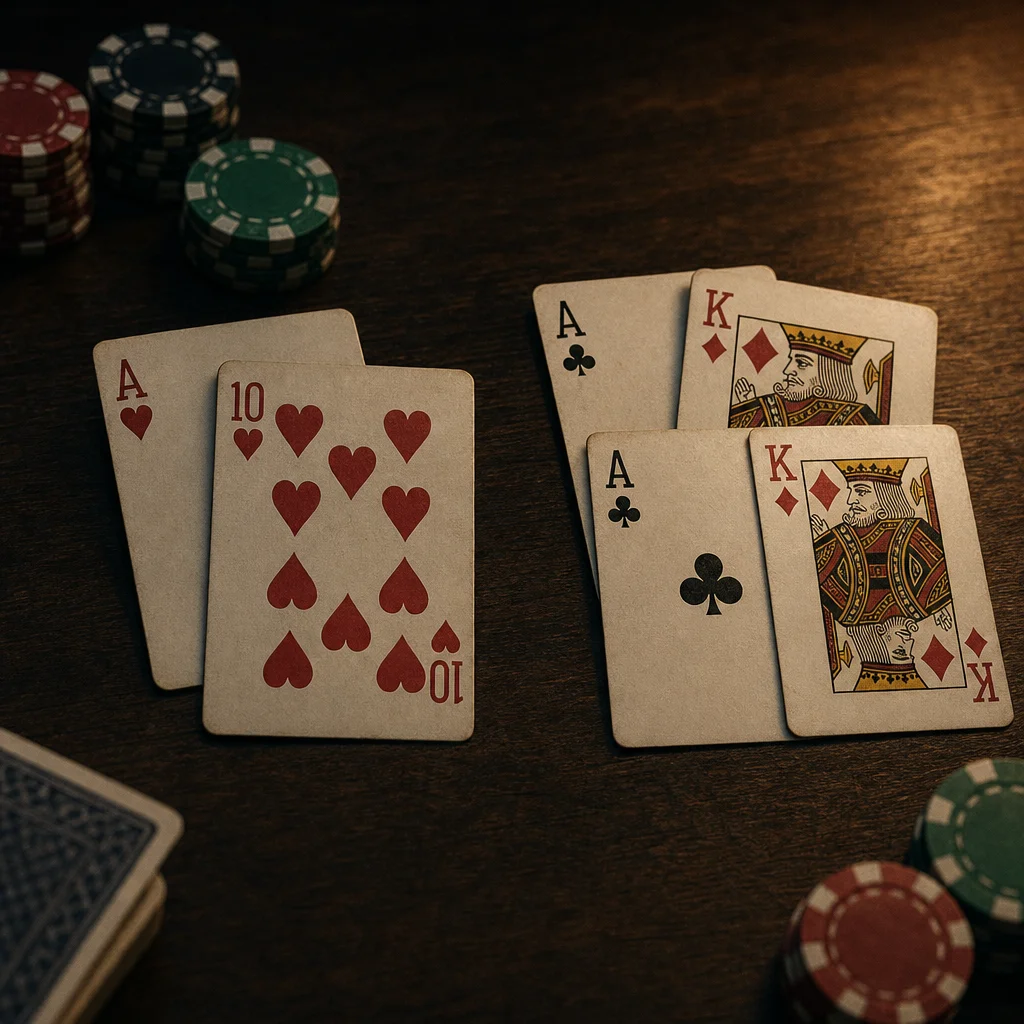
Standard poker hand rankings, from strongest to weakest, run: royal flush, straight flush, four of a kind, full house, flush, straight, three of a kind, two pair, one pair, and high card. Three of a kind sits in the middle of that list, strong enough to win a large share of showdowns yet common enough that it loses regularly to flushes, straights, and full houses. A three of a kind beats two pair every time, regardless of the ranks involved, because hand categories always outrank kicker or pair comparisons within a lower category.
The table below shows the categories directly above and below three of a kind, along with a short description of each, to make the hierarchy easier to scan at a glance.
| Rank Position | Hand Category | Composition |
|---|---|---|
| 5 | Flush | Five cards of the same suit, any order |
| 6 | Straight | Five cards in sequence, mixed suits |
| 7 | Three of a Kind | Three matching-rank cards plus two unmatched |
| 8 | Two Pair | Two separate matching pairs plus one kicker |
| 9 | One Pair | Two matching-rank cards plus three unmatched |
Comparing Trips to Two Pair
Probability of Making Three of a Kind
In a standard five-card poker hand dealt from a 52-card deck, three of a kind occurs in roughly 2.11% of all possible hands, or about 1 in 47. In Texas Hold'em specifically, a player holding a pocket pair improves to a set on the flop close to 12% of the time, a figure often referred to as "set mining" odds. These numbers explain why three of a kind appears often enough to be a familiar hand, yet rarely enough to beat flushes and straights consistently. For the formal reference treatment of this material, see Wikipedia's list of poker hands.