

Highest Hand in Poker: Top of the Hierarchy
A five-of-a-kind hand is the only combination that ranks above every other hand in poker, though it exists solely in games that use a wild card. Under standard rules with a single 52-card deck, the highest hand in poker is the royal flush, and this entry covers the top tiers of the ranking system: the royal flush itself, the hand that sits directly below it, and the wild-card exception that changes the picture entirely. In most home games and casino cash games, no wild cards are in play, so the royal flush remains the highest possible hand in poker a player can hold.
Poker hand rankings exist because the game needs a fixed order of value that every player accepts before the cards are dealt. That order stays constant across nearly all variants, from Texas Hold'em to Seven-Card Stud, which is why the highest ranking poker hands look identical online or at a casino table. For the exact composition and odds of the top hand, see the entry on the royal flush.
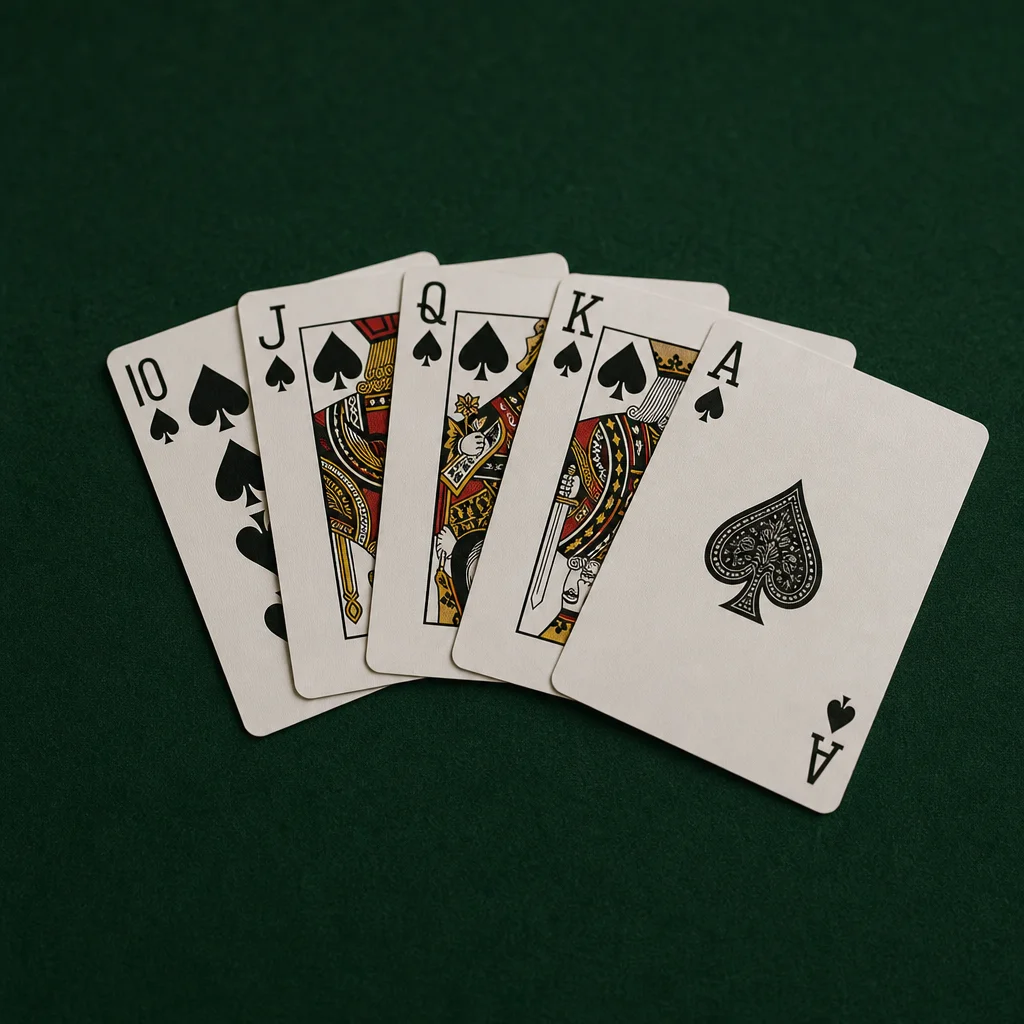
The Royal Flush Sits at the Top
As the highest hand in poker under standard play, the royal flush is the highest scoring poker hand, and no other combination can beat it without wild cards. It consists of the Ace, King, Queen, Jack, and Ten of a single suit, forming the highest possible straight flush. Because a straight flush ranks by its highest card, and Ace-high cannot be topped by any other suited sequence, the royal flush occupies a category of its own. This entry skips how the hand is built or how rare it is; that detail belongs to the royal flush page.
What Ranks Second in the Hierarchy
The second highest hand in poker is the straight flush, five consecutive cards of the same suit that fall short of Ace-high. A straight flush such as 9-8-7-6-5 of hearts loses only to a royal flush, and it beats every four-of-a-kind, full house, flush, straight, and lower hand in the deck. Between two straight flushes, the one with the higher top card wins, so a King-high straight flush defeats a Queen-high one. The gap between first and second place is narrow in structure but absolute in outcome.
| Rank | Hand | Composition |
|---|---|---|
| 1st | Royal flush | A-K-Q-J-10, single suit |
| 2nd | Straight flush | Five consecutive cards, single suit, below Ace-high |
| 3rd | Four-of-a-kind | All four cards of one rank plus any fifth card |
| 4th | Full house | Three of one rank plus two of another |
| 5th | Flush | Five cards of one suit, not in sequence |
Third Place and the Rest of the Ranking
Four-of-a-kind sits directly below the straight flush and is the third highest hand in poker. It consists of all four cards of one rank, such as four Queens, paired with any fifth card. When two players hold four-of-a-kind, the higher-ranked quad wins regardless of the fifth card. Below it, the order continues with full house, flush, straight, three-of-a-kind, two pair, one pair, and high card. This entry does not rank starting hands before the flop; that topic is covered on the best starting hands strategy page.
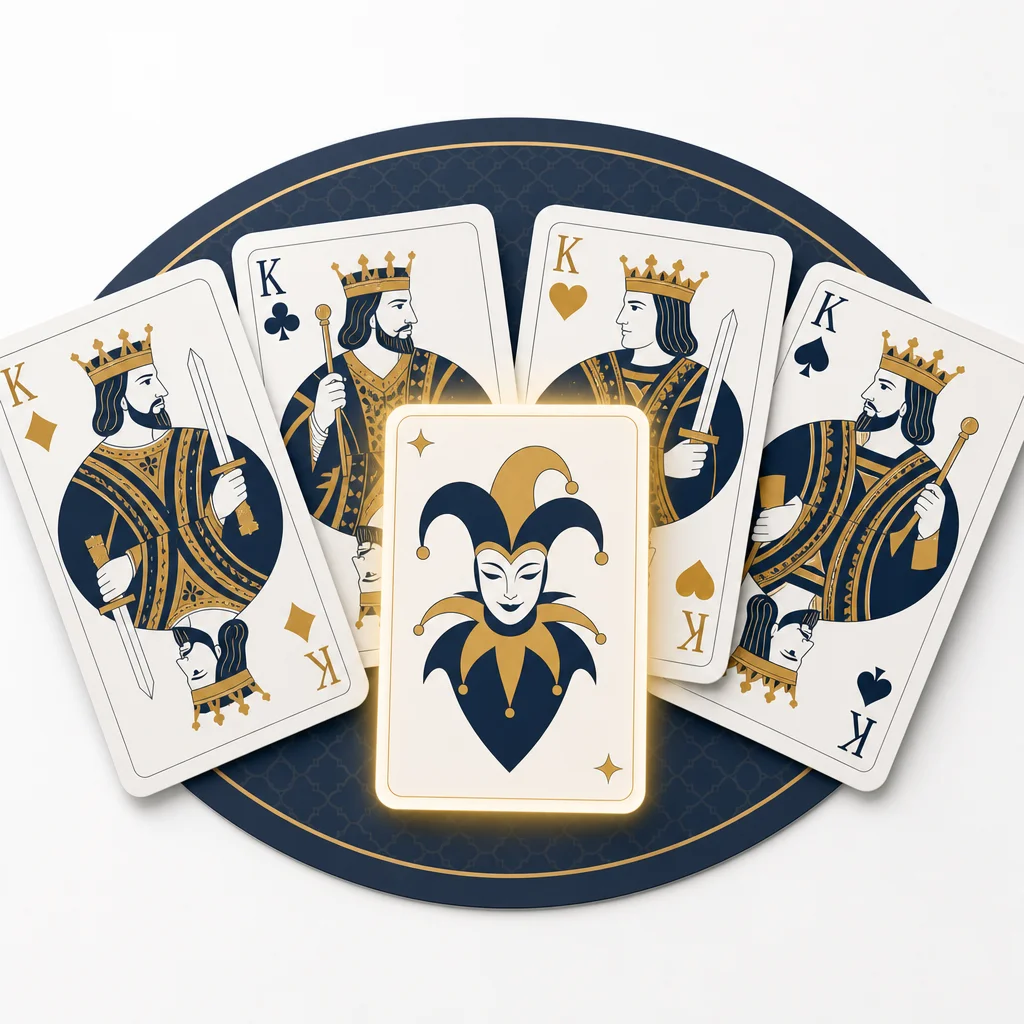
How Wild Cards Change the Highest Hand in Poker
The highest hand in poker with wild cards is five-of-a-kind, a combination that cannot exist in a standard game because a 52-card deck holds only four cards of any rank. Games that designate a wild card — commonly a joker, or a rule that makes deuces wild — let a player combine four natural cards of one rank with a wild card to complete a fifth match. Four natural Kings plus one wild card forms five-of-a-kind Kings, and this hand outranks even the royal flush. It only appears in home-game variants like Joker Poker or Deuces Wild, not in standard Hold'em, Omaha, or most tournaments.
Comparing Two Five-of-a-Kind Hands
Why the Distinction Matters at the Table
Knowing where a hand sits in the hierarchy affects how a player reads the board and judges an opponent's likely holding. A four-of-a-kind can feel unbeatable, yet it still loses to a straight flush or a royal flush whenever the board texture allows one. In wild-card formats, even one designated wild card shifts the odds of five-of-a-kind appearing, changing the relative value of strong-but-not-top hands. Rule sheets at casinos typically state upfront whether a game uses wild cards, since the ranking order for the highest hand in poker above four-of-a-kind depends on that rule. Readers who want the canonical write-up can consult Wikipedia's list of poker hands.